


You wake up, stretch, and feel a genuine sense of morning peace. The air is cool, your mind is quiet, and you feel rested. Then, you reach for your phone and open your sleep tracker. The screen flashes a dismal 58% “Optimal Rest Score.” Instantly, the illusion shatters. Your shoulders tense, a phantom exhaustion settles into your bones, and your mood plummets—all because an algorithm told you how you were supposed to feel.
Welcome to the wellness trap. In our relentless modern quest for health, we have inadvertently transformed self-care into a demanding secondary job, complete with performance anxiety, data logging, and an endless digital scoreboard.
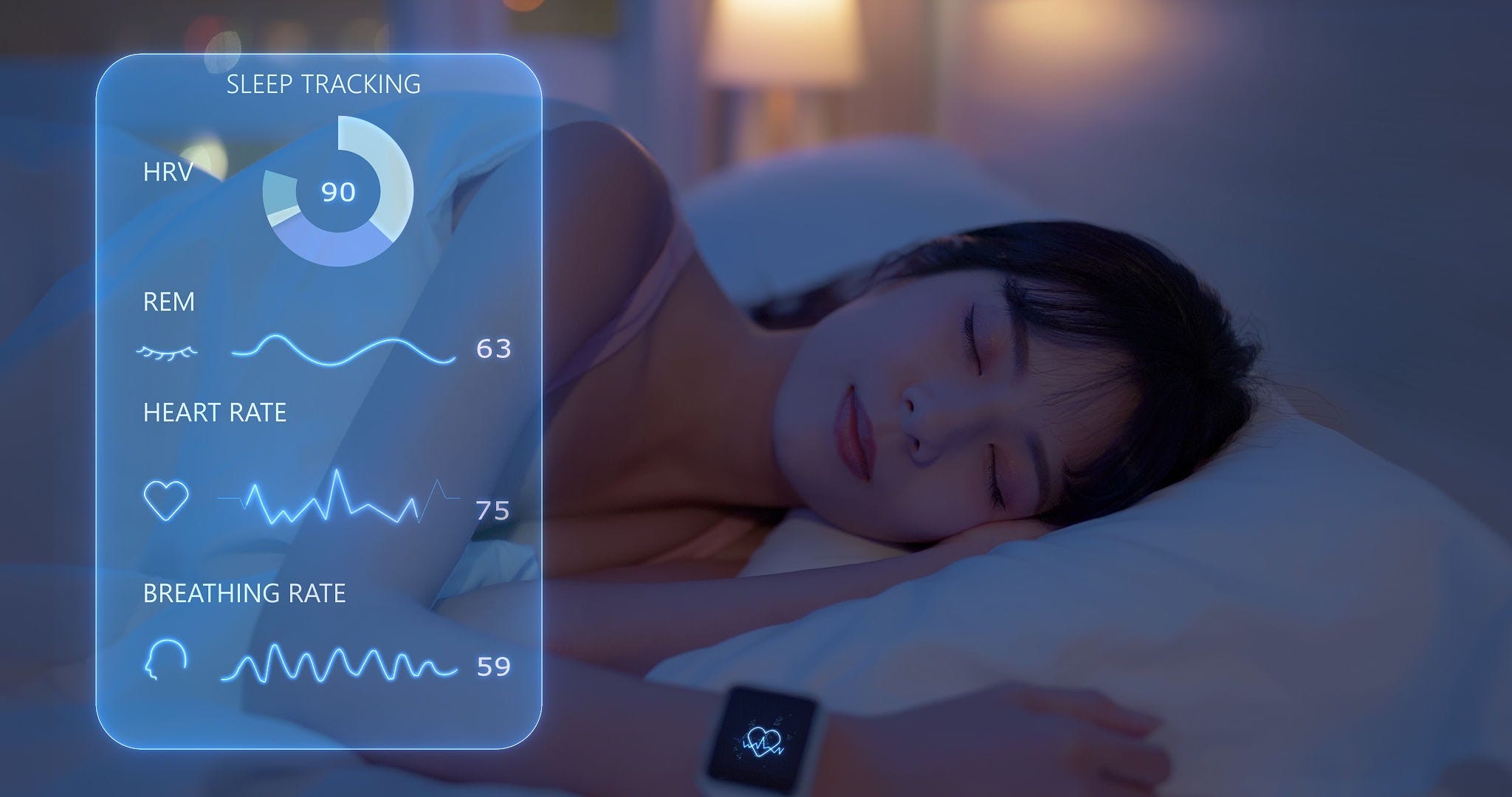
When sleep becomes a performance review: the modern quantified self. Source: PonyWang / Getty Images
1. The Illusion of Absolute Control
Modern wellness culture promises that if you track enough data points—if you biohack your morning, count every macro, and map your heart rate variability (HRV)—you can optimize your biology to perfection. The ancient philosopher Epictetus would call this an elegant form of madness.
At the absolute core of Stoic philosophy lies the dichotomy of control: the foundational understanding that some things are up to us, and some things are completely out of our hands.
In the ancient world, health was classified as a preferred indifferent. This means that while having a healthy body is objectively preferable to being sick, its absolute state is ultimately outside our direct, 100% control. Biology is messy. It is subject to aging, genetics, and random environmental shifts.
By obsessing over hyper-specific micro-metrics, we expand our zone of anxiety. We are desperately trying to force things that belong to fate into the tiny bucket of things we can control. When you treat your body like a machine to be perfectly engineered, every biological fluctuation feels like a personal failure.
2. The Monetization of Tranquility
The Stoics frequently wrote about ataraxia—a state of mental tranquility that remains undisturbed by external chaos. Today, the wellness industry sells us tools to purchase this peace of mind, but the tools themselves often destroy it.
Consider the paradox: you buy a fitness ring, a smart mattress, or a premium meditation app to reduce your stress levels. However, these tools operate on the exact same mechanics as the rest of the attention economy. They nudge you with notifications, deliver weekly progress reports, and gamify your rest.
“To wish to be well is a part of health.” — Seneca
Seneca warned against the chronic restlessness of the human mind. When we get caught in a consumerist loop where internal peace is always one more gadget or one more supplement away, we live in a permanent state of deficiency. If you are constantly trying to aggressively fix your biology, you are operating under the subconscious assumption that you are permanently broken.
3. Objectifying the Soul
When we view ourselves entirely through a dashboard of metrics, we reduce our humanity to data points. We celebrate a “good day” because our screen gave us a green ring, and we mourn a “bad day” because our steps were low.
Marcus Aurelius focused heavily on the hegemonikon—the ruling center of the mind. He argued that the only true measure of a day’s worth is the quality of your character, your choices, and your judgments.
Modern Optimization Focus
Resting Heart Rate
Deep Sleep Cycles
Daily Caloric Deficit
Perfect Productivity KPI’s
Ancient Stoic Focus
Emotional Equanimity
Kindness to Neighbors
Clarity of Judgement
Acceptance of Fate
The data on your screen cannot measure integrity. A sensor cannot track how patient you were with your children, how focused you remained during a difficult conversation, or how courageously you faced an uncomfortable truth. The wellness trap makes us hyper-focused on optimizing the physical vessel while completely neglecting the character of the human being navigating inside it. It matters very little if your resting heart rate is a perfect 45 bpm if you are impatient, anxious, and deeply unkind to the person standing in line next to you.
The Silent Practice: The 48-Hour Metric Fast
To break free from this digital performance anxiety, we don’t need to add a new habit. We need to practice radical subtraction. For the next 48 hours, you are invited to participate in a Metric Fast.
Step 1: Blind the Dashboards. Take off your smartwatch or fitness ring and leave it on your dresser. If you use apps to track your food, your water intake, or your screen time, log out of them entirely.
Step 2: Reclaim Internal Awareness. When you wake up tomorrow morning, do not look at a phone to see how you slept. Close your eyes for thirty seconds and ask your body directly: How do my eyes feel? How do my muscles feel? What is my natural energy level right now? Rebuild the broken bridge of internal intuition.
Step 3: Move and Eat by Judgment, Not Data. Eat a meal because you are hungry and want to nourish yourself, not because a macro counter told you that you have 400 calories remaining. Go for a walk because the fresh air clarifies your mind, not because an artificial intelligence told you to close a digital circle.
If you participated in the Metric Fast, I would love to hear how it shifted your mental clarity. Drop your reflections in the comments below.