

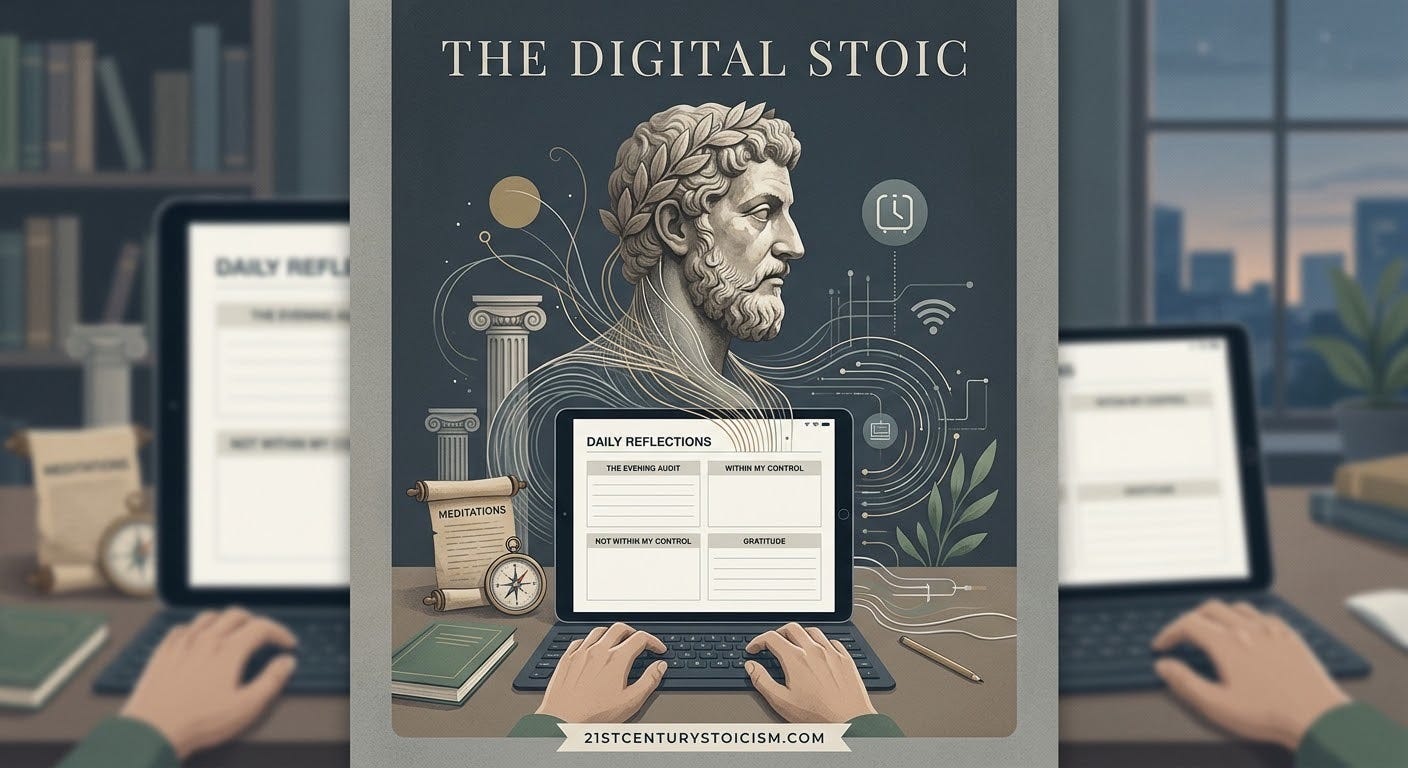
There’s a strange but persistent myth in modern philosophy circles that to truly practice Stoicism, you need to be hunched over a leather-bound notebook with a fountain pen. When you mention integrating modern technology into your daily reflections, purists often cringe, convinced that bringing screens into the mix somehow dilutes the wisdom of Marcus Aurelius or Seneca. We tend to treat these ancient texts as if their value lies in the primitive tools used to write them, rather than the timeless truths they contain. But let’s be honest with ourselves: if the great Stoics had access to modern digital tools to organize their thoughts, they absolutely would have used them.
This is exactly why relying on digital tools - specifically structured templates - for daily journaling is such a game-changer. The blank page can be incredibly intimidating, especially at the end of a long day when your mental energy is completely tapped out. By setting up a digital workspace, you remove the friction of having to decide what to write about. A well-designed template gently guides you through essential exercises, like separating what is within your control from what isn't, or reviewing your daily behavior during an evening audit. It ensures that you actually show up and do the work, turning a lofty, abstract philosophy into an actionable, consistent habit.
I know the hesitation, though. There’s a genuine fear that relying on templates might automate the experience a bit too much, cheapening the deep, personal introspection that Stoicism requires. It’s easy to worry that filling out pre-set prompts turns a profound philosophical practice into just another robotic productivity hack. But structure doesn't stifle reflection; it actually creates a reliable container for it. When you don't have to spend your cognitive load trying to remember which questions you meant to ask yourself, your mind is completely free to dive deeply into the answers. You aren't automating the philosophy - you are simply streamlining the logistics of your practice.
At the end of the day, Stoicism was never meant to be a historical reenactment. It’s a practical, living framework designed to help us navigate the messiness of real life in the present moment. Whether you’re writing your evening reflections in a worn journal or typing them into a beautifully organized digital database, the medium doesn’t change the meaning. What matters is that you are showing up, taking an honest look at your day, and striving to be a little better tomorrow. Don't be afraid to use the tools of the 21st century to apply the wisdom of the ancients. Whatever keeps you consistently engaged is exactly the right tool for the job.