


If someone were to walk into your home and begin taking your furniture, your money, or your clothing, you would immediately defend your property. You might call for help, fight back, or at the very least, experience a profound sense of outrage. Yet, when people walk into our lives and take our time—or worse, when we willingly throw our own time away on trivial distractions—we rarely put up a fight. We treat time as if it were an infinite resource, a commodity of zero value.
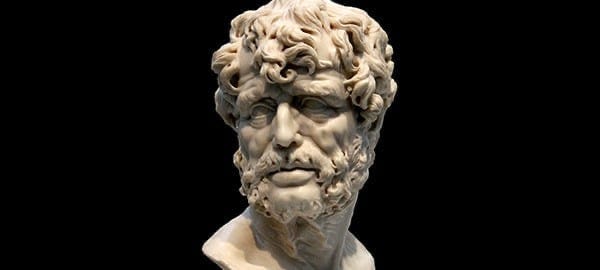
The Roman statesman, dramatist, and Stoic philosopher Lucius Annaeus Seneca spent much of his life observing this profound psychological contradiction. In his masterpiece essay, On the Shortness of Life, Seneca diagnosed a fundamental human delusion: we act like mortals in all that we fear, but like immortals in all that we desire. This temporal arrogance is the psychological engine that drives procrastination.
The Asymmetry of Time Valuation
Procrastination relies entirely on a false assumption of future abundance. We delay writing a report, starting a difficult project, or having an uncomfortable conversation because we believe that "later" is a safe container that will always be waiting for us. Seneca argued that this is an intellectual failure. We measure time by what is visible—the calendar, the clock—and because we cannot physically see our remaining lifespan depleting, we treat it as if it does not exist.
Seneca noted that people are tightly protective of their wealth and land, guarding their boundaries with fierce determination. Yet, when it comes to the only possession where greed is actually honorable—time—we are incredibly wasteful. We allow meaningless meetings, social obligations, and minor worries to consume hours, days, and years. Procrastination is simply the ultimate manifestation of this waste: it is the decision to borrow from a future we do not own to pay for a laziness we cannot afford.
The Psychological Trap of "Later"
Modern cognitive science confirms what Seneca observed two millennia ago: human beings are terrible at predicting their future emotional states. When we kick a task down the road, we are operating under the illusion that our "future self" will somehow be different from our "present self." We assume that tomorrow’s version of us will be more energetic, more inspired, less distracted, and possessing supernatural willpower.
Seneca shattered this illusion by pointing out the absurdity of putting off our best life for a distant, unpromised future. He observed people declaring that they would retire at age fifty or sixty to finally focus on wisdom and self-improvement. He asked: How can you be sure you will even live that long? Why do you leave your most important duties for the scrap end of your life? The procrastinator does the exact same thing on a micro-scale every single day, assuming that the evening, the weekend, or next week will automatically provide the perfect conditions for action.
The Stoic Antidote: Living a Complete Life Each Day
To break the spell of the illusion of "later," Seneca proposed a radical shifting of perspective. Instead of viewing life as a long highway stretching into the horizon, a Stoic should view each individual day as an entire, self-contained life. When you wake up, your life begins; when you go to sleep, it concludes.
By shrinking your temporal horizons down to the next twenty-four hours, procrastination loses its logical foundation. You can no longer tell yourself "I will do it tomorrow," because tomorrow exists outside the boundaries of your current life. Seneca advised reviewing your day every evening, asking yourself what vices you fought, what virtues you practiced, and whether you used your hours wisely. If you can go to bed knowing you did not retreat from your duties, you have conquered the illusion of time asymmetry.
Practical Strategies to Stop Squandering Time
To align our daily actions with Seneca’s philosophy and eliminate the habit of delaying our work, we can adopt three practical habits:
1. Treat Time as a Physical Currency
Before you choose to put off a critical task in favor of a distraction, visualize your time as actual money leaving your bank account. Ask yourself if the distraction you are choosing is truly worth the exact dollar value of your life energy. When you procrastinate, you are paying a massive premium for temporary comfort.
2. Kill the "Perfect Timing" Myth
Waiting for the perfect moment, the perfect mood, or the perfect burst of creative inspiration is a form of cowardice. The ideal conditions you are waiting for do not exist. Seneca noted that life is happening right now, while we hesitate. Action must be taken in the messy, imperfect reality of the present moment.
3. Audit Your Distractions
Be brutally honest about what is stealing your time. Seneca regularly examined his own life to see where he was leaking energy to trivial matters. Keep a tight boundary around your deep work hours, guarding them with the same intensity you would use to guard your physical home from an intruder.
The ultimate warning Seneca offers to the procrastinator is a chilling one: while we are busy delaying, life accelerates past us. The future is entirely uncertain, and the past is unchangeable. The present moment is the only terrain where you possess any power. Stop negotiating with a future you aren't promised, and do the work today.
Often the root cause of our suffering are the beliefs we hold that guide our actions. Feel sorry for your future self if you are not living in alignment with what you want today.